
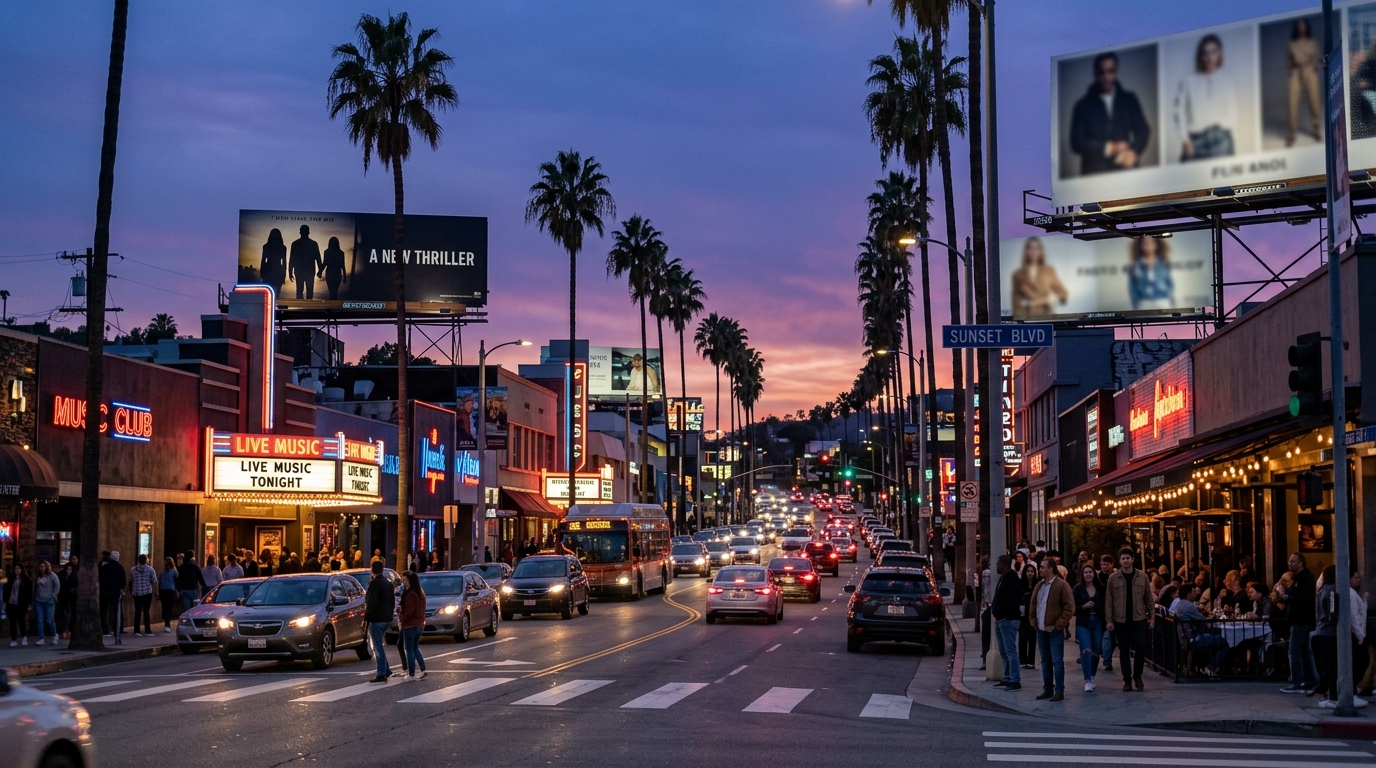
Sunset Strip music history tells the story of how a short stretch of West Hollywood became one of the world’s most recognizable entertainment districts. For generations, musicians, filmmakers, artists, and nightlife fans have gathered along this famous part of Sunset Boulevard.
Today, visitors can still experience the neighborhood’s electric atmosphere. Historic music venues stand near restaurants, hotels, illuminated billboards, and lively sidewalks.
However, the Strip offers more than nightlife. Its changing identity reflects the development of Los Angeles entertainment, from glamorous early clubs to rock concerts and modern live performances.
This 2026 guide explores the neighborhood’s musical legacy, introduces important landmarks, and explains how to plan a rewarding visit.
How Sunset Strip Music History Shaped Los Angeles
The Sunset Strip is a roughly 1.6-mile section of Sunset Boulevard in West Hollywood. Its history stretches back before rock music, electric guitars, and famous concert marquees.
During the early twentieth century, entertainment businesses grew along the corridor. The area attracted people who wanted nightlife outside the busiest parts of Hollywood.
Over time, the Strip developed a reputation for glamorous clubs and creative experimentation.
Its story reflects several generations of Southern California culture rather than one single musical style.
From glamorous nightclubs to the rock revolution
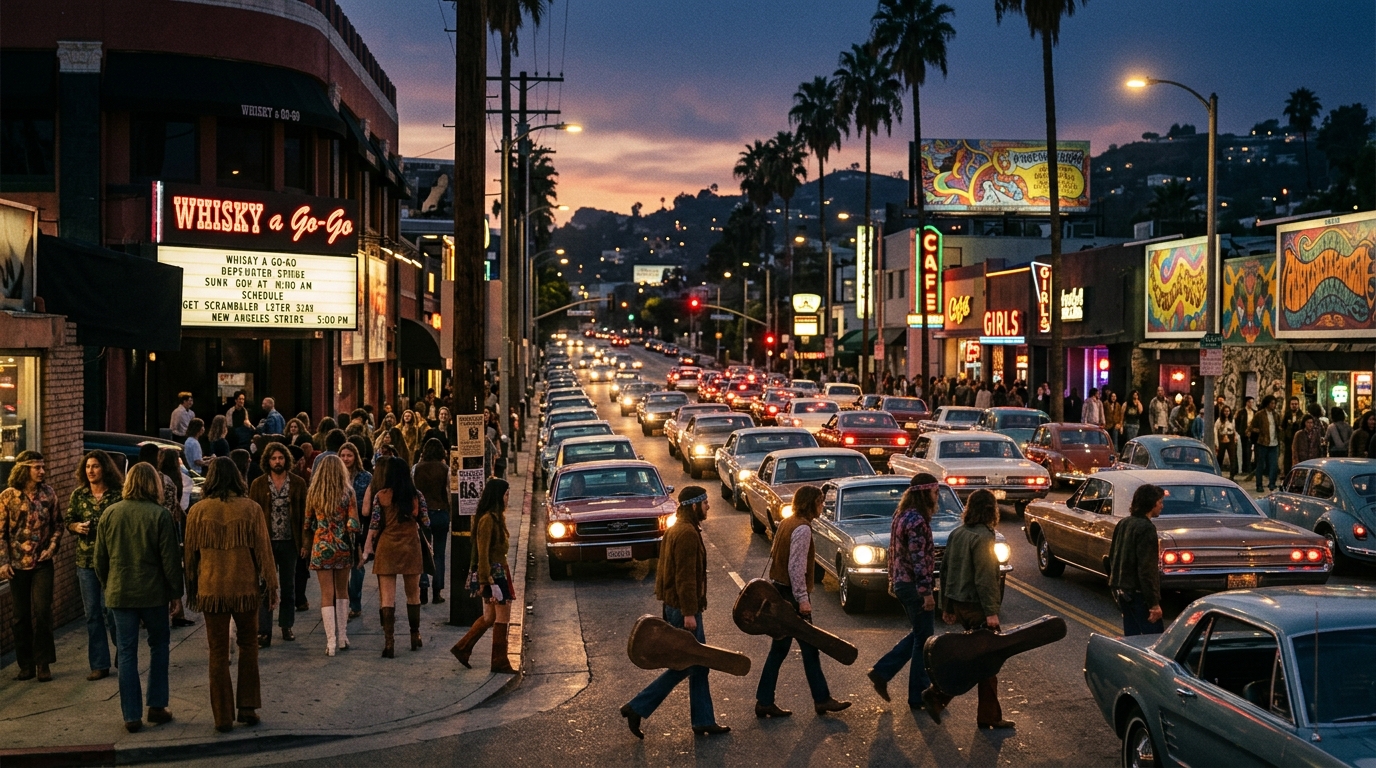
During the 1920s and 1930s, nightlife establishments helped establish the Strip’s identity. Hollywood personalities and visitors gathered at restaurants and clubs along Sunset Boulevard.
In later decades, venues such as Ciro’s and the Mocambo became associated with the area’s glamorous entertainment scene.
By the 1960s, the neighborhood entered another major chapter. Rock musicians and young audiences began redefining the Strip’s image.
Electric guitars, experimental performances, and countercultural influences turned local stages into nationally recognized destinations.
Why the 1960s changed the Sunset Strip
Several influential bands performed in West Hollywood during the decade. The Doors, The Byrds, and other artists helped establish the Strip’s connection to emerging rock music.
Music venues offered performers opportunities to reach new audiences and develop their stage presence.
The neighborhood also became a gathering place for young people interested in new cultural movements.
However, this growth created tensions between nightlife crowds, local authorities, and surrounding communities.
These conflicts became part of the Strip’s broader cultural history.
Visitors interested in the area’s changing identity can explore our Los Angeles neighborhoods guide.
How the 1970s and 1980s expanded its legacy
The Strip continued evolving after the 1960s. During the 1970s, musicians explored new approaches to rock, punk, and other live performance styles.
Meanwhile, established clubs introduced additional audiences to emerging performers.
During the 1980s, glam metal and hard rock became closely associated with Sunset Boulevard.
Bands such as Mötley Crüe and Guns N’ Roses developed strong connections with the area’s music scene.
The neighborhood’s distinctive signs, crowded clubs, and energetic performances helped shape its international reputation.
Yet the Strip continued changing as new genres and audiences arrived.
Legendary music venues that defined the neighborhood
The Strip’s history becomes especially interesting when visitors connect familiar music stories with real buildings.
Some venues have welcomed audiences for decades, while others have changed names, ownership, or purpose.
Two particularly important examples are Whisky a Go Go and The Roxy Theatre.
Both venues continue to represent different periods of West Hollywood’s musical development.
Whisky a Go Go and the rise of rock music
Whisky a Go Go opened in January 1964 at 8901 Sunset Boulevard. It quickly became one of the Strip’s best-known clubs.
The venue helped popularize go-go dancing while supporting musicians who later achieved international recognition.
The Doors performed there as a house band in 1966. Other famous acts connected with the Whisky include Jimi Hendrix, Janis Joplin, and several generations of rock performers.
Its history reflects the close relationship between local stages and the broader development of American popular music.
Today, the club remains an active performance venue.
Visitors can explore the official Whisky a Go Go history before planning an evening.
The Roxy Theatre and its musical influence
The Roxy Theatre opened in 1973 and became another important part of Sunset Strip music history.
Its founders included influential music industry figures who wanted to create an intimate performance venue.
Over the decades, the stage has hosted musicians across several genres.
Notable performers associated with the venue include Neil Young, Bruce Springsteen, and Prince.
The Roxy illustrates how smaller venues can provide memorable musical experiences even when surrounding entertainment trends change.
Today, the theater continues operating as a live music destination.
Check the venue’s official calendar before visiting because concert schedules, admission policies, and entry requirements vary.
How to Experience the Sunset Strip in 2026
Visitors do not need a concert ticket to appreciate Sunset Boulevard’s musical heritage.
A daytime walk reveals historic buildings, recognizable marquees, storefronts, and the neighborhood’s changing architecture.
At night, illuminated signs and entertainment crowds create a different atmosphere.
However, a successful visit requires realistic expectations about transportation, venue policies, and the surrounding area.
Plan a music-focused walk through West Hollywood
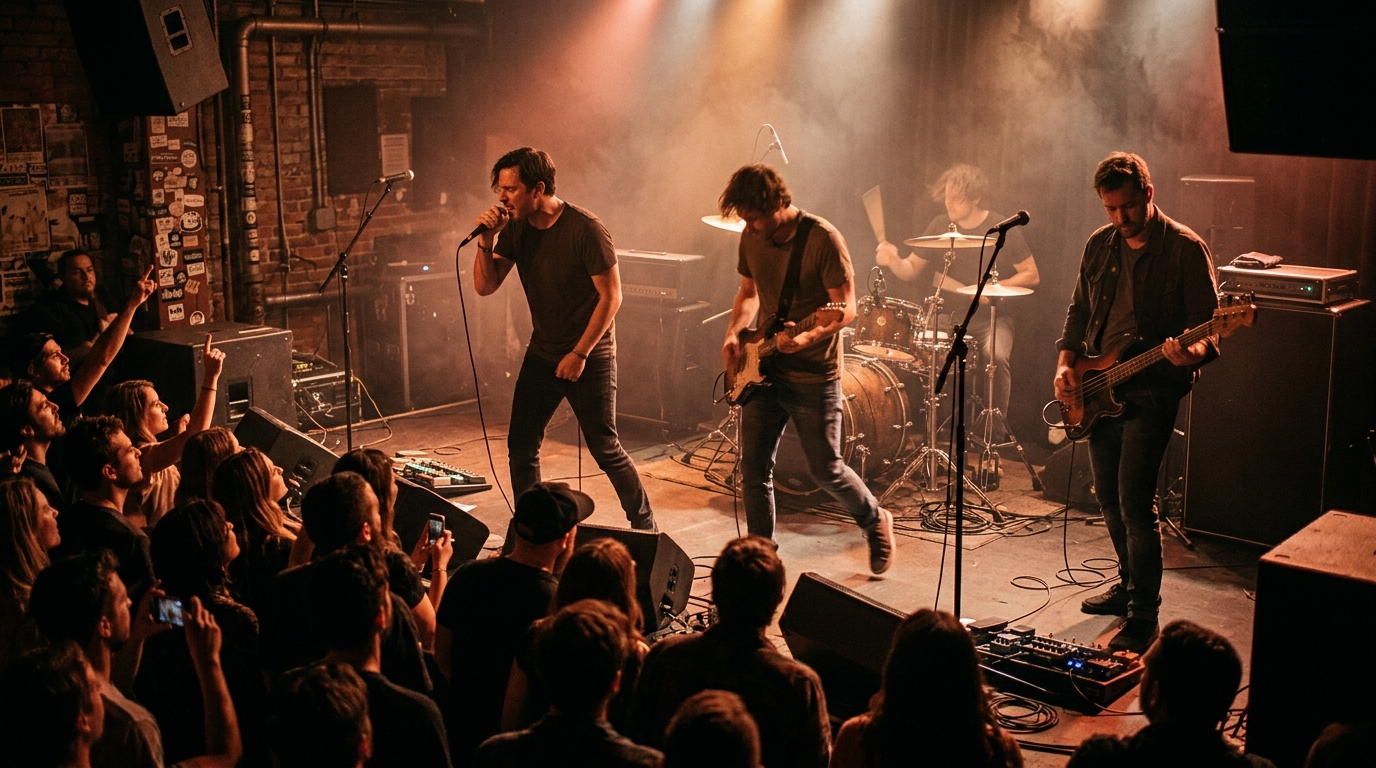
Start by deciding whether your priority is sightseeing or attending a live performance.
A sightseeing visit gives you more flexibility. You can explore public sidewalks, observe famous venues, and learn about the area’s history at your own pace.
If a concert is your main goal, build the evening around the event rather than trying to visit several unrelated destinations.
That approach reduces unnecessary travel and leaves more time to enjoy the neighborhood.
Build an easy Sunset Strip itinerary
Begin with a short walk near the Strip’s historic music venues. Look at the architecture, theater signs, and surrounding streetscape.
Next, choose a nearby restaurant or café for a break.
Finally, attend a scheduled performance if you have tickets, or continue exploring the neighborhood’s public areas.
For more local experiences, browse our things to do in Los Angeles guide.
Before leaving home, confirm current opening times and event policies.
Some venues operate mainly around performances and may not admit sightseeing visitors during the day.
Choose daytime or nighttime based on your goals
Daytime visits generally make it easier to study building details and photograph streetscapes.
Evening visits highlight the Strip’s illuminated signs and music atmosphere.
However, nightlife crowds and traffic can become heavier around popular performance times.
Choose the experience that best matches your interests.
Visitors traveling with children should also review age restrictions before purchasing concert tickets.
Some performances admit all ages, while others impose minimum-age requirements.
Plan transportation before the evening begins
West Hollywood traffic can become challenging, particularly during busy evenings and special events.
Research parking options before departure. Check posted restrictions rather than assuming every nearby street allows overnight parking.
Public transportation and rideshare services may provide alternatives, depending on your starting point.
However, pickup locations and transit schedules can change.
When walking, use marked crossings and follow traffic signals.
Never enter the roadway simply to photograph a famous sign or music venue.
Respect the venues and surrounding community
The Sunset Strip is a working neighborhood as well as a cultural attraction.
Residents, businesses, performers, and visitors share the area.
Respect private property, entry restrictions, and concert photography policies.
A ticket does not always permit professional cameras, recording equipment, or unrestricted filming.
Ask permission before photographing people closely or using their images commercially.
Keep sidewalks accessible and avoid blocking doorways while taking photographs.
Explore beyond a single concert
Music history can serve as the starting point for a larger neighborhood experience.
Visitors might combine a historical walk with shopping, an art-related stop, or a meal.
However, avoid filling every hour with separate activities.
Los Angeles distances and traffic can make an overloaded itinerary frustrating.
A better plan allows you to discover interesting places along the way.
Our Los Angeles local guides provide additional ideas for building a focused outing.
Use reliable sources when exploring music history
The Strip has inspired countless stories, documentaries, photographs, and personal memories.
However, popular legends sometimes combine fact with exaggeration.
For accurate historical details, compare venue histories with archival records and reputable local tourism resources.
Visit West Hollywood publishes guides to the Strip’s landmarks and cultural development.
Its materials can help visitors place individual venues within the larger history of the neighborhood.
For additional background, read Visit West Hollywood’s guide to famous Sunset Strip places.
Support today’s local music scene
The Strip’s most meaningful cultural contribution is not limited to performers from previous decades.
Working musicians still need venues, audiences, and opportunities to build careers.
When attending a show, arrive according to the venue’s instructions and support performers respectfully.
Consider discovering an unfamiliar opening act rather than attending only for a famous headliner.
Follow venue rules and treat staff and other guests courteously.
Take photos without losing the experience
Photographs can help preserve memories of the Strip’s architecture and atmosphere.
Try capturing wide streetscape images along with details of historic signs.
Always follow venue photography restrictions.
At a concert, avoid holding a phone where it blocks another guest’s view.
A few thoughtful images often tell a better story than continuous recording.
Most importantly, allow yourself to enjoy the performance and neighborhood.
Make time for Sunset Boulevard’s wider story
Sunset Boulevard connects several communities with distinct identities.
The West Hollywood Strip represents only one part of that larger corridor.
Exploring nearby neighborhoods can reveal different approaches to food, design, entertainment, and everyday city life.
These contrasts help explain why Sunset Boulevard remains such a recognizable symbol of Los Angeles.
Understanding the broader area also makes the historic music district more meaningful.
Why the history still matters in 2026
The Sunset Strip continues attracting visitors because its past and present coexist.
Historic clubs remain recognizable even as new restaurants, hotels, and entertainment experiences reshape the surrounding streets.
The neighborhood shows how local venues can influence culture far beyond their physical size.
It also demonstrates why communities value places connected with art and shared memories.
Sunset Strip music history remains an essential part of Los Angeles identity.
From glamorous early nightlife to influential rock performances, the Strip has experienced repeated reinvention.
Visitors in 2026 can appreciate that legacy by exploring responsibly, learning about the venues, and supporting today’s performers.
Whether you visit for a concert or a simple neighborhood walk, Sunset Boulevard offers an opportunity to experience the connections between music, history, and local culture.
Visitor note: Venue schedules, event policies, ticket availability, and transportation conditions may change. Verify current details before your visit.